
April 11, 2017 – Introduction & Foundation
I originally chose this text as my book of choice as it seemed to align with the reasoning / main topics of why I pursued the AET program degree in the first place – “What are tried and tested ways to improve learning with adults?” This book address’ that topic by presenting seven principles…that were distilled from over twenty-nine year of experience consulting with faculty colleagues about teaching and learning (p. 2). An early theme in the Introduction is that we learning how better to teach by better understanding how students learn.
we define learning as a process that leads to change, which occurs as a result of experience and increases the potential for improved performance and future learning (p. 3)
These are directly in-line with the conclusory ideas that I’m leaving the AET program with and looking to expand more on! While they state that each of the ideals are individual – they only work when combined and used holistically with each other. We’ll be digging into each of these more as they are presented in individual chapters/sections:
- Students’ prior knowledge can help or hinder learning
- How students organize knowledge influences how they learn and apply what they know
- Students’ motivation determines, directs, and sustains what they do to learn
- To develop mastery, students must acquire component skills, practice integrating them, and know when to apply what they have learned.
- Goal-directed practice coupled with targeted feedback enhances the quality of students’ learning.
- Students’ current level of development interacts with the social, emotional, and intellectual climate of the course to impact learning
- To become self-directed learners, students must learn to monitor and adjust their approaches to learning.
April 14, 2017 – Chapter 1 – How Does Students’ Prior Knowledge Affect Their Learning?
(while searching to learn more about this text/book – I came across this PowerPoint presentation used as a Keynote discussion and found it to be VERY good & relevant to any discussion of HLR)
Chapter 1 focuses on how the students use (or not use) prior knowledge to connect/build new knowledge. It is important to remember that “Students do not come into our courses as blank slates, but rather with knowledge gained in other courses and through daily life (p. 13)”. While some of this knowledge might be declarative knowledge (knowledge of facts and concepts that can be stated or declared) or procedural knowledge (knowing how and knowing when to apply various procedures, methods, theories, styles, or approaches) – it is ‘important to help students activate prior knowledge so they can build on it productively’ (p. 16). They go on to list a variety of ways in which an instructor could gauge/test the level of prior knowledge:
- Talk to Colleagues
- Administer a Diagnostic Assessment (using Concept Inventories – which are ungraded test that includes answers that are common misconceptions to open discussion and highlight to students)
- Have Students Assess their own Prior Knowledge
- Use Brainstorming to Reveal Prior Knowledge
- Assign a Concept Map activity
- Look for Patterns of Error in Student Work
I think the real point in the work really goes beyond what is written in that the real point is to engage students first; give them a reason WHY they want to learn the material and where this new learning could take them. A great method of engagement talked about in the text is ‘..ask(ing) students questions that require them to use their prior knowledge to make predictions about new information before they actually encounter it’ (p. 33).
Another point made is about how damaging it can be to build on ‘Inappropriate Prior Knowledge’ – but I might disagree with this thinking in that I think it more important to understand the root/why they learned it this way and to open them up to the possibility of receiving new ideas. If the students are not given the opportunity to ‘open their minds’ to ‘corrected’ information – they might miss opportunities to build bridges (and frustrate the instructors/students as nothing is gained).
April 19, 2017 – Chapter 2 – How Does the Way Students Organize Knowledge Affect Their Learning?
This chapter highlights that, “it is not just what you know but how you organize what you know that influences learning and performance” (p. 65). A large focus was on the discussion of knowledge organizations, which is not the particular pieces of knowledge, but rather how those pieces are arranged and connected in an individual’s mind. The comparison between a novice and expert was shown based on their knowledge organizations:
- expert – they have many ‘pieces of knowledge’ but also are able to link them together into a larger picture of understanding having many inter-connections
- novice – might not have as many pieces and doesn’t connect them together to see the bigger picture
One thing an instructor can do (that has been tested and shown great results) is to offer the students an advance organizer – a set of principles or propositions that provide a cognitive structure to guide the incorporation of new information (basically giving the students what the organizational / inter-connection structure looks like first then providing the knowledge into the various spots of the puzzle).
The authors did offer a variety of other suggestions to help students prepare and link knowledge successfully – they basically all centered around the idea of ‘Concept Maps’ which we’ve discussed in our AET core.
April 21, 2017 – Chapter 3 – What Factors Motivate Students to Learn?
It feels that the previous chapters were dancing around this ‘white elephant’ topic which seems to be the central core to what is being discussed – that student’s motivation is an essential core to successful learning transfer. While I believe most of us already believe the truth to that statement – the authors ‘breakdown’ and highlight the components that are included. For example, they define motivation as ‘the personal investment that an individual has in reaching a desired state or outcome….In the context of learning, motivation influences the direction, intensity, persistence, and quality of the learning behaviors in which students engage (or not)‘ (pg 68-69). They continue to break it down by stating ‘there are two important concepts that are central to understanding motivation’:
- the subjective value of a goal
- the
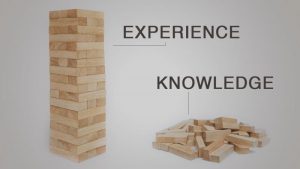 expectancies, or expectations for successful attainment of that goal (pg 69)
While we as instructors may intrinsically see the value in a subject to the taught – it is often because we have already connected-the-dots (see Chapter 2 above) between this learning and the usefulness/need in other areas. We have to help the students ‘assemble the various, disorganized, non-connected’ pieces into a picture that they desire. They help us by showing the importance ‘to realize that we have three important levers (value, efficacy expectancies, and the supportive nature of the environment) with which we can influence motivation)'(pg 80). And that if we neglect any of one of the three, motivation may suffer substantially. They do that through listing a important aspects of Strategies that:
- Establish Value
- Help Students Build Positive Expectancies
- Address Value and Expectancies
Once we can help the student’s mindset see the value and expectations that then feed their motivations toward a goal – we have a much higher chance for a building time between us both.
April 24, 2017 – Chapter 4 – How do Students Develop Mastery?
Chapter Four can best be described as a freight train; starting a bit slow and laborious but engaging and racing to the summit of knowledge transfer at the end! This chapter highlights the difference between a student/novice and the understanding/knowledge/application of an expert – and the individual steps between the two that must be bridged for successful knowledge transfer to occur. The authors give a great example:
To an experienced driver, driving is effortless and automatic, requiring little conscious awareness to do well. But for the novice driver, it is complex and effortful, involving the conscious and gradual development of many distinct skills and abilities. A similar process exists in the development of mastery in academic contexts. (pg. 94)
Some of the iterative steps to go from “not knowing what I don’t know” to fluent, non-conscious automaticity are:
- acquire discrete skills / component skills (the ‘content knowledge’) – it is also dependent & incumbent on the instructor to recognize what these are and present them individually (reinforcing any that are weak with the students). It is often seen that experts have an ‘expert blind spot’ that causes them to ‘skip steps’ or employ shortcuts that novices cannot do.
- practice the skills to the point that they can be combined fluently and used with a fair degree to autonomy. It has been shown that everyone has a cognitive load maximum – which is the total information-processing that are imposed by a given task or set of tasks. Once additional load is added, a person’s limit is exceeded and they have increased errors, reduced performance, and less learning. Experts don’t necessarily have a higher cognitive load – it is just that the tasks are more highly practiced and have an overall lower cognitive load.
- Knowing when to apply the specific discrete skills / component skills and how to transfer this knowledge to new applications and new contexts (whether these are ‘near’ in the learning context and transfer context are similar or ‘far’ in that the contexts are dissimilar).
The authors continue even further by providing the instructor with strategies and techniques to specifically build each of these iterative steps for greatest learning transfer. Without a doubt, this chapter has the most highlighted sections by me and will further warrant more review when I’m approaching a specific teaching opportunity. This chapter alone is worth the price of the book!
April 25, 2017 – Chapter 5 – What Kinds of Practice and Feedback Enhance Learning?
I think the title of the chapter (taken in reverse) are key to understanding the point: Learning is enhanced by (Goal-Directed) Practice and (Targeted) Feedback. Goal-directed practice allows the student to ‘break down’ into measurable chunks the knowledge or skill to be obtained (like a musician practicing a ‘tough’ part of a song – but seeing how it fits into the whole score). Targeted feedback gives specifics to the student of what part of the goal was missed – providing ‘instructional scaffolding (structure & support)’ in the feedback has shown, through the studies, to greatly increase student performance. Another interesting aspect of this chapter focuses on how a student’s perception of their improvement doesn’t come at the beginning or after long-time practicing, but rather, in the middle and challenging our ‘want it fast’ society in that “…the benefits of practice accumulate only gradually (pg. 133)”. The authors have some good ideas of how to improve each of the above specifics but I believe they’ve really missed the boat. Only a short amount of time is given to the topic of Rubrics (about a paragraph) but should be greatly increased as they are the ‘practicals’ of how these topics can be actually manifested within a real-world learning environment. The CSU AET curricula does a much better job of presenting Rubrics, their usage, and a practical implementation within the final Presentations & Portfolios.
April 26, 2017 – Chapter 6 – Why do Student Development and Course Climate Matter for Student Learning?
 Recently I received this shirt as a gift from my daughters, except that my version says, “I have two teenage daughters”. The opening section of this chapter sounded much like the recourse I hear in response to, “So – how what your day at school” (so I was prepared to either hunker down to wait for the ‘drama’ or run/hide until it was over). Luckily, the authors quickly brought in research and comparisons of Student Development models -whew, these I can handle!
The point of the Chapter is best said, “(j)ust as the holistic movement in medicine calls for doctors to treat patients, not symptoms, student-centered teaching requires us to teach students, not content” (pg. 158) and that by recognizing ‘the social and emotional gains that students make during college are considerably greater than the intellectual gains over the same span of time’ (pg. 157) – we need to realize that the instructors can have a great impact on the course climate. Students (at this age-group AND Adult Learners) have ‘a lot’ on their plate aside from the academics of college . Of particular interest (and one I hope to do further investigation on) was The Chickering Model of Student Development (1969) that tries to document the various stages, called ‘vectors’, that cumulatively build on each other:
- Developing competence – involves some aspect of intellectual, physical, and/or interpersonal competence recognized by the student
- Managing emotions – being aware of one’s own emotions and how to express them appropriately
- Developing autonomy – can I handle ‘life’ on my own sans the typical support structures of family
- Establishing identity – Chickering considers this the ‘pivotal dimension’ in that students with well-developed sense(s) of self feel less threatened by new ideas involving beliefs that conflict with their own
- Freeing interpersonal relationships – awareness and tolerance of differences among people
- Developing purpose – Once identity is achieved, the question is no longer “Who am I?” but “Who am I going to be?”
- Developing integrity – the tension between self-interest and social responsibility
Once we realize that intellectual development takes time, we can begin to employ strategies in the classroom that reflect an understanding of social identity so that we can anticipate the tensions that might occur and be proactive about them. The authors conclude with a fairly good list of ‘Strategies That Promote Student Development and Productive Climate’ so that we can prepare and react appropriately.
April 27, 2017 – Chapter 7 – How Do Students Become Self-Directed Learners?
Conclusions & Recommendation
We’ve reached the last chapter and found the apex of that we’re hoping for – creating students that are Self-Directed Learners! The author’s highlighted principles are: “To become self-directed learners, students must learn to assess the demands of the task, evaluate their own knowledge and skills, plan their approach, monitor their progress, and adjust their strategies as needed.” (pg. 191) with the main concept relating to metacognition – ‘the process of reflecting on and directing one’s own thinking’. While identifying the steps may sound easy, some of the issues occurs in that ‘the majority of them (students) overestimated their abilities relative to their actual performance.’ To compound the problem, students with weaker knowledge and skills are less able to assess their abilities than students with strong skills (pg. 195). The authors include many practical strategies that an instructor could use for each aspect and then to two highlight two additional methods to increase overall metacognition:
- Model Your Metacognitive Process – Show students how you yourself would approach an assignment and walk them through the various phases of your metacognitive process.
- Scaffold Students in Their Metacognitive Processes – determine various support ways that focus on individual, discrete phases in isolation then help to move them to the holistic picture.
The authors conclude the text stating that while they presented the material in individual chapters – there should be a few themes that continue to pop up and each of these methods should be integrated and molded to adapt to the ever changing instructors, material, and students. They’ve included Appendix chapters that discuss:
- Student Self-Assessment
- Concept Maps
- Rubrics
- Learning Objectives
- Ground Rules
- Exam Wrappers
- Checklists
- Reader Response/Peer Review
Overall, I would highly recommend this text to anyone involved in instructing college/adult aged students. It contains the real ‘meat’ of what I was looking for in formal AET training (as evidenced by the duplicate information presented between the text and the CSU curricula) and has numerous, research-support backing to help the industry.